

19-10-2026
ADA MED SUPPLY LIMITED
Article tag: ADA-502A acupuncture model 70cm acupuncture model acupuncture teaching model acupoint model review m
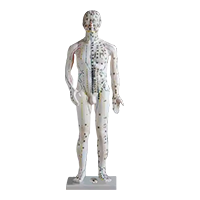
Short answer: ADA-502A is a 70 cm acupuncture teaching model. The listing says it is “more detailed with acupoints and easy to learn and understand Chinese Acupuncture Science,” but it does not publish the material, the number of points, the labelling language, the base, the carton size or the price. It is a reasonable mid-size candidate for a classroom, provided you confirm those six items in writing before ordering.
Key takeaways
| Criterion | Published? | Detail |
|---|---|---|
| Height | Yes | 70 cm |
| Intended use | Yes, descriptive | Acupuncture teaching; “more detailed with acupoints” |
| Point count | No | Not stated |
| Material | No | Not stated |
| Labelling language | No | Not stated |
| Base / stand | No | Not stated |
| Carton size / weight | No | Not stated |
| Price | No | “Please contact us to obtain the price.” |
Size is the most under-discussed specification in acupuncture teaching models. A 26 cm model is a personal revision aid: it fits in a bag and can be held in one hand. A 70 cm model is a classroom object: visible from the second row, stable on a bench, and large enough to demonstrate a meridian pathway without a projector. A 178 cm model is a life-size figure for proportional measurement and full-body point location, but it needs floor space and a stand.
The catalogue illustrates the range: BIX-Y1011 is a 26 cm PVC model with 361 meridian points and 48 extra points and a published reference price of US $8.84, while ADA-501 is listed as a 178 cm deluxe model. ADA-502A sits in the middle. If your teaching room has tables but no floor stand, 70 cm is often the most practical compromise.
| Missing item | Why it changes the purchase decision |
|---|---|
| Point count | “Detailed” is not a number. If the course requires 361 meridian points plus extra points, confirm the count. |
| Material | PVC, silicone and resin behave differently under repeated handling and cleaning. |
| Labelling language | Bilingual labels are essential for international students; a Chinese-only model may not fit an English course. |
| Base | A stable base is the difference between a demonstration model and a hand-held prop. |
| Carton size and weight | 70 cm models are volumetric; freight can be a meaningful share of the landed cost. |
A 2025 review of developments in acupuncture education describes how training is being reorganised around competencies and structured practice [1]. A comparative educational study of immersive virtual reality for acupuncture knowledge and practical skills shows that the delivery method is being actively tested, not assumed [2]. A 2026 commentary on anatomy-based mapping of acupoints argues that the conceptual gap between a point on a chart and a point on a body remains unresolved [3]. That is precisely why the physical model still earns its place — but only when the model’s own specifications are clear enough to support the lesson.
The limitation of this review is the same as the limitation of the listing: without the missing six specifications, no one can judge the model on accuracy, durability or value. The honest conclusion is “promising size, incomplete data,” not “best model.”
It is not the right choice if you need a documented point count today, a bilingual label set, or a published price to compare against another quote.
| Question | Expected answer |
|---|---|
| How many points are marked, and are extra points included? | A number, plus whether the 48 extra points are present. |
| What material is the body and the base? | PVC, silicone, resin or other; base material and stability. |
| What languages appear on the labels? | English, Chinese or bilingual; whether codes are printed or stickered. |
| What are the carton dimensions and gross weight? | Numbers for freight and storage. |
Send these four questions to adacpr@adaanatomy.com with the model number ADA-502A and your quantity. We will answer each one in writing and attach the current carton data.
Q1. How tall is ADA-502A?
70 cm.
Q2. How many acupuncture points does it have?
The page does not state a number. Confirm the point count before ordering.
Q3. What is it made from?
The page does not state the material. Ask for the body and base material in writing.
Q4. Is it life-size?
No. It is a 70 cm teaching model, not a 178 cm life-size figure.
Q5. Can I practise needling on it?
The listing describes an acupuncture teaching model with acupoints; it does not describe needle depth or tissue feedback. Treat it as a point-location model.
Q6. How much does it cost?
Price is not published. Email adacpr@adaanatomy.com with the model and quantity for a quotation, and ask for the carton data in the same message.
Write to adacpr@adaanatomy.com for the ADA-502A specification sheet. If you are comparing it with a 26 cm or 178 cm model, include both model numbers in the same email so the point counts and labelling conventions can be compared like for like.