

04-11-2026
ADA MED SUPPLY LIMITED
Article tag: electronic CPR simulator BIX-CPR195 CPR training manikin with feedback BLS training equipment
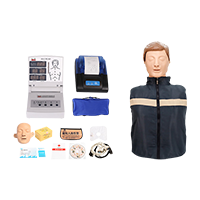
Most BLS courses need three things from a manikin: a realistic chest, immediate feedback on depth and rate, and a price that allows one unit per two or three students. The BIX-CPR195 is built for that middle tier. It gives a half-body torso with green/yellow/red compression-depth lights, a 100–120/min rate beep and a chest-rise check for mouth-to-mouth — enough objective feedback to correct a class, without the cost and complexity of a computer-scored simulator.
| Item | Detail |
|---|---|
| Model | BIX-CPR195 |
| Type | Electronic cardiopulmonary resuscitation simulator |
| Form | Half-body torso with simulated airway opening |
| Compression feedback | Depth 5–6 cm: yellow = insufficient, green = correct, red + buzzer = too strong |
| Ventilation | Mouth-to-mouth with visible chest rise; tidal-volume guidance on the product sheet |
| Rate | 100–120 compressions/min, marked by a beep |
| Mode | Training operation |
| Power | Electronic indicator panel; confirm voltage with the supplier |
| Packaging | Standard export packaging |
| Price | Quoted per order |
| Certification | ISO documentation on request |
Depth lights. The torso reports compression depth against the 5–6 cm adult target. Yellow tells a trainee to push harder; green confirms the depth; red and a buzzer tell them to ease off. This is the single most useful feature for a mixed-ability class, because depth is the variable instructors cannot judge reliably from the side of the room.
Rate beep. A 100–120/min guide tone keeps the class on the same rhythm. It is not a metronome substitute for coaching, but it removes the most common drift — speeding up during the first minute.
Chest rise. For mouth-to-mouth, the visible rise and fall is the feedback. The product sheet gives tidal-volume guidance; the instructor still has to watch for excessive volume and gastric inflation.
These three channels map onto the variables that matter in CPR quality. The 2020 AHA guidelines specify a compression depth of at least 5 cm but not more than 6 cm and a rate of 100–120/min [1], and the consensus statement on CPR quality identifies depth, rate, recoil and pauses as the modifiable determinants of outcome [2]. A trainer that reports depth and rate covers two of those four; recoil and pause fraction remain instructor-observed.
Buyers should be clear about the ceiling of a light-and-sound trainer:
If your course requires a score sheet per student, a computer-scored manikin is the right category. If your course requires immediate correction and high repetitions per unit cost, the CPR195 is the better fit.
Community and lay-responder courses. One unit per two trainees, high repetition, minimal setup. The light panel does the first correction so the instructor can circulate.
Nursing and medical schools. Good for pre-clinical BLS practice before students move to full-body or computer-scored manikins.
Hospital BLS renewals. The half-body form is easy to store and clean, and the feedback shortens the "push harder" phase of every session.
It is not the right choice for ACLS team training, paediatric resuscitation or any course that assesses compression fraction.
The purchase price is only part of the budget. Plan for:
Ask for a per-100-trainee consumable estimate with the quotation. That number, not the unit price, determines whether the course runs at budget.
Q1. Does the CPR195 give a score? No. It gives depth lights, a rate beep and visible chest rise. Scoring and reporting require a computer-scored manikin.
Q2. Is the compression depth target adjustable? The unit is set for the adult 5–6 cm target described on the product sheet. Confirm with the supplier before ordering if you need a paediatric configuration.
Q3. What is the price and MOQ? Price is quoted per order. Email adacpr@adaanatomy.com with quantity, destination and course type for the current price list and volume tiers.
Q4. What consumables does it use? Face shields or lung bags and replacement chest skins. Ask for the part numbers and a per-100-trainee estimate.
Q5. Can it be used for AED training? No. It has no rhythm generator or defibrillation interface; AED training needs separate equipment.
Q6. What warranty and after-sales support are included? Warranty terms, spare-part availability and technical support should be confirmed in writing with the quotation.
For a quotation, the consumable list or a demonstration video: adacpr@adaanatomy.com. Production follows ISO 45001 management practice; CE documentation is available for EU procurement.